Which Sense Develops First in a Fetus?
Touch — sensitivity near the mouth around seven to eight weeks, spreading to face and limbs before hearing and sight mature.
Touch develops first in fetal life — sensitivity near the mouth by about seven to eight weeks, then spreading across the body before hearing and sight fully mature.
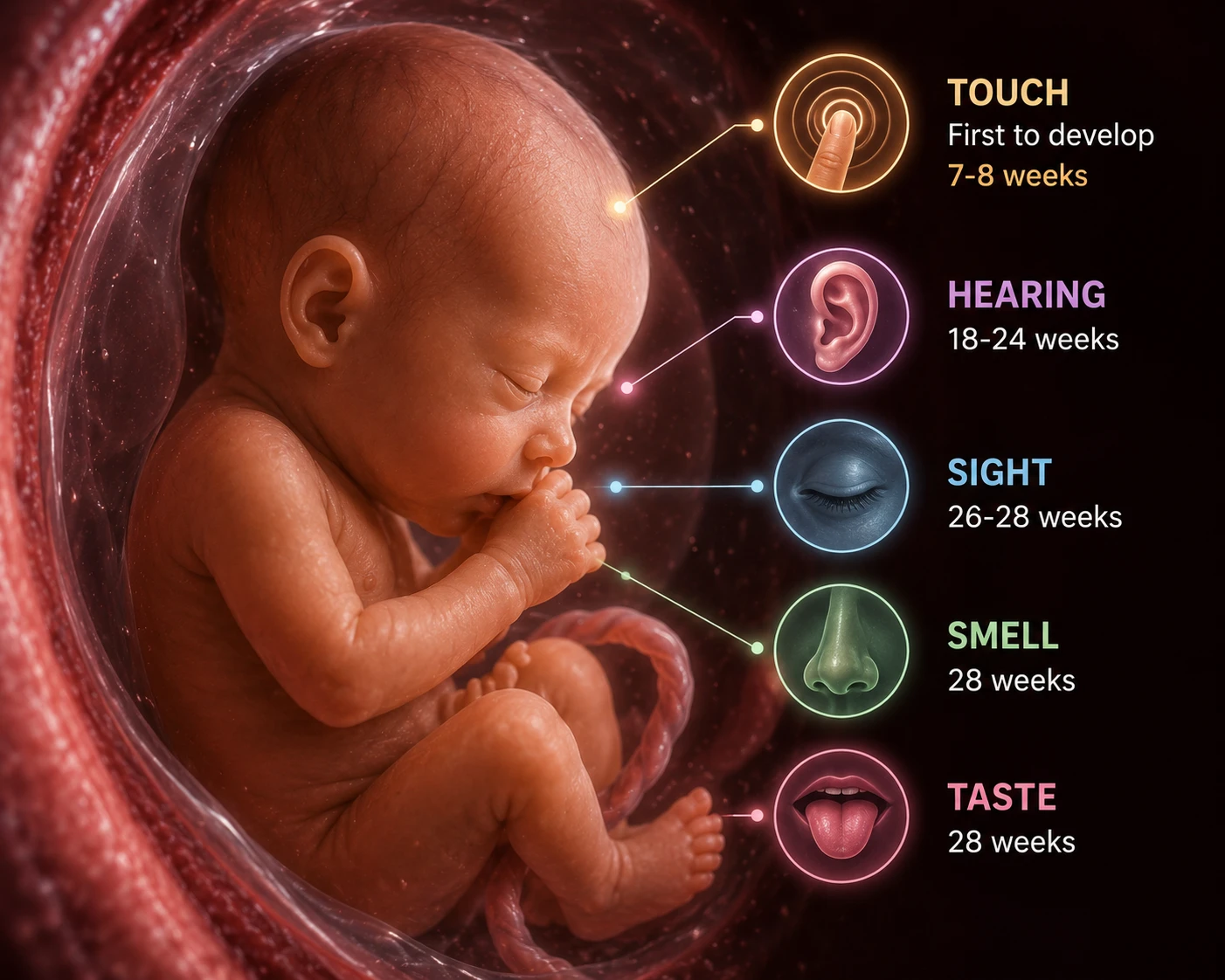
Touch is the earliest specialized sense to emerge in human development. Receptors around the mouth appear in the first two months, followed by the face, palms, and soles — long before hearing and vision reach functional maturity.
Touch Leads the Timeline
Early reflex responses to touch around the mouth support feeding reflexes later in life.
By mid-pregnancy, most of the body surface responds to pressure and movement in the uterine environment.
Hearing and Vision Follow
The inner ear and auditory pathways develop over the second trimester; recognizable responses to sound increase in the third.
Eyes form earlier but light-sensitive vision develops late — the womb is dark, so sight is the last sense to become useful before birth.
References
National Institute of Child Health and Human Development — fetal development (NIH).
Peer-reviewed developmental neuroscience reviews (PubMed-indexed).
March of Dimes — pregnancy week-by-week education.
Key Takeaways
- Early reflex responses to touch around the mouth support feeding reflexes later in life.
- The inner ear and auditory pathways develop over the second trimester; recognizable responses to sound increase in the third.
Frequently Asked Questions
Can fetuses feel pain?
Complex ethical and medical definitions apply; clinically important pain pathways are discussed in obstetric and pediatric guidelines — ask your care team for context.
Why touch first?
Early touch helps map the brain's body representation and supports reflexes needed after birth.
When can a fetus see?
Light perception matures in the final trimester; meaningful vision awaits after birth.
Related articles
Glossary · Frequently asked questions · All Learning Center articles