How Much of the Human Body Is Water?
About 60% in adults and higher in newborns — water in cells, blood, and fluid spaces keeps every organ working.
Adults are about 60% water by mass; newborns are higher (~75%). Water is distributed inside cells, in blood, and in fluid spaces essential to organ function.
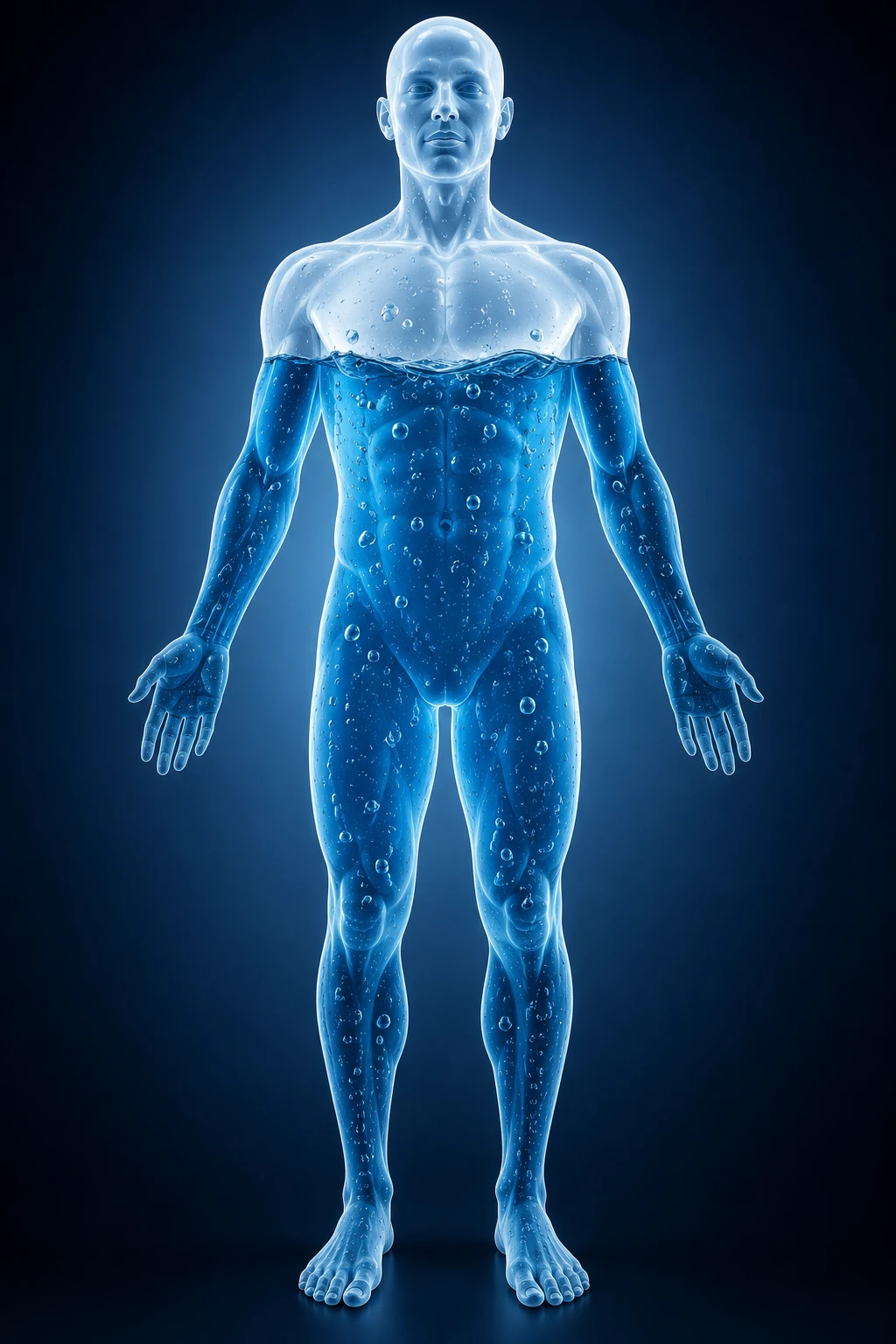
Water is not stored in one tank — it is inside cells, between cells, and in blood plasma. Adults are roughly 60% water by mass; infants start closer to 75% and gradually reach adult proportions as body composition shifts toward more bone and fat.
Where the Water Lives
Intracellular fluid inside cells holds most body water; extracellular fluid includes blood plasma and fluid bathing tissues.
Even 'dry' structures like bone contain bound water; the brain is especially water-rich.
Key Facts
Losing as little as 2% of body water can affect mood and concentration — thirst is an early warning system.
Kidneys regulate volume and electrolytes; severe dehydration or overhydration without balance can be medical emergencies.
Daily needs vary with climate, activity, pregnancy, and illness — personalized advice comes from clinicians, not fixed rules for everyone.
References
National Academies — Dietary Reference Intakes for water and electrolytes.
MedlinePlus — Dehydration and fluid balance (NLM).
Guyton and Hall Textbook of Medical Physiology (standard reference).
Key Takeaways
- Intracellular fluid inside cells holds most body water; extracellular fluid includes blood plasma and fluid bathing tissues.
- Losing as little as 2% of body water can affect mood and concentration — thirst is an early warning system.
Frequently Asked Questions
Do men and women differ?
Average percentages differ slightly because muscle holds more water than adipose tissue; individual variation is wide.
Is eight glasses a day required?
Total fluid needs include food and beverages; follow thirst and medical guidance for your situation.
How is water measured medically?
Bioimpedance and isotope studies exist in research; routine care uses history, exam, and labs when needed.
Related articles
Glossary · Frequently asked questions · All Learning Center articles