How Long Does a Red Blood Cell Live?
About 120 days — then your bone marrow replaces roughly two million cells every second while the spleen recycles iron.
Red blood cells live about 120 days before the spleen and liver remove them; bone marrow continuously replaces them — roughly two million new cells per second in adults.
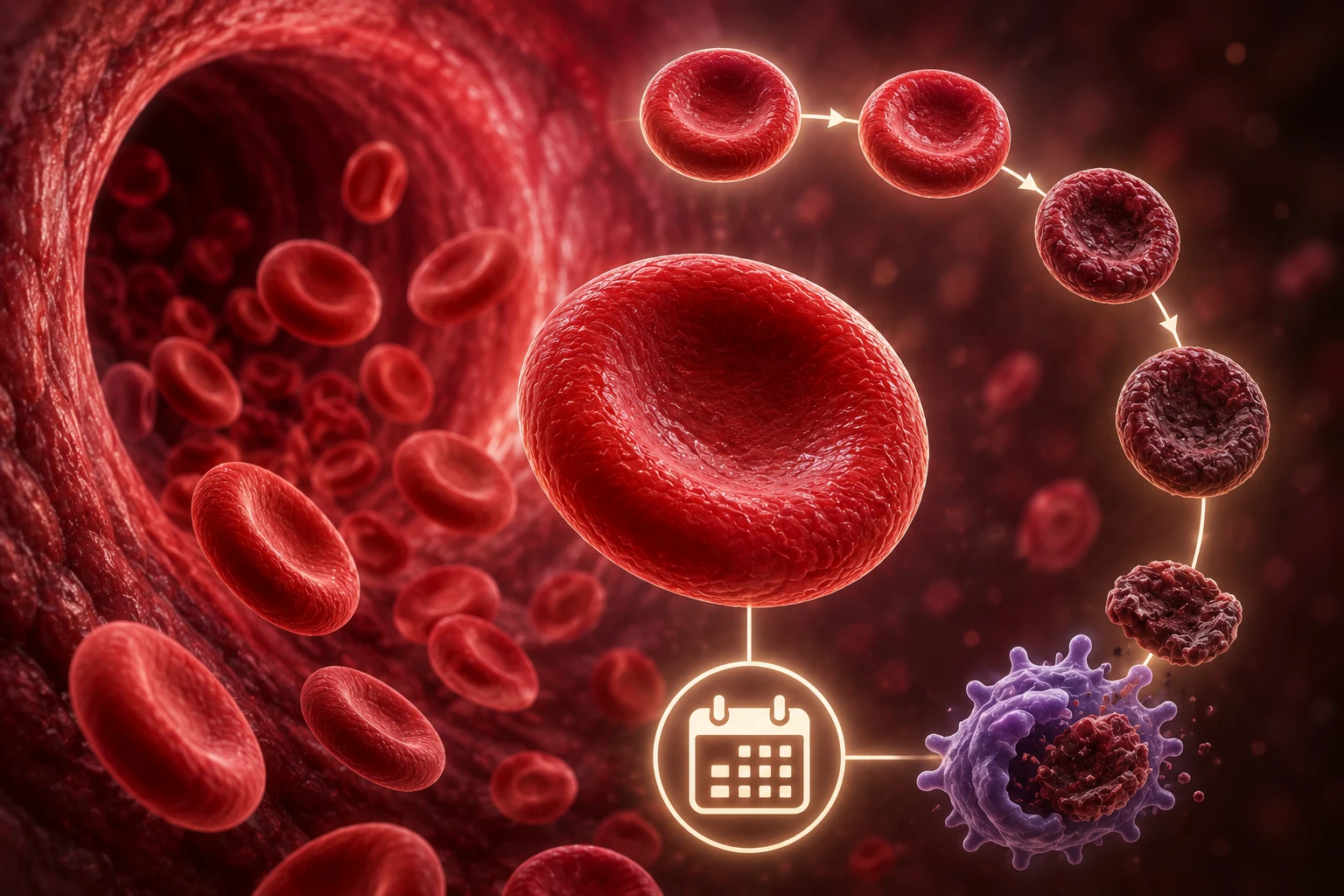
Red blood cells carry oxygen from lungs to tissues using hemoglobin. They have no nucleus and cannot repair themselves, so each cell has a finite life — about four months — before it is removed and replaced.
The 120-Day Life Cycle
As RBCs age, they become less flexible squeezing through tiny capillaries. The spleen and liver filter out damaged cells.
Iron from old cells is recycled to build new hemoglobin, which is why iron status matters for healthy blood production.
Key Facts
Bone marrow produces millions of new red cells per second in adults under steady-state conditions.
A complete blood count (CBC) measures red cell number, size, and hemoglobin — a routine part of many checkups.
Anemia means too few cells or too little hemoglobin; causes range from diet to chronic illness and require medical evaluation.
References
National Heart, Lung, and Blood Institute — Blood diseases and resources (NIH).
MedlinePlus — Red blood cell count.
Williams Hematology and standard physiology texts (peer-reviewed reference works).
Key Takeaways
- As RBCs age, they become less flexible squeezing through tiny capillaries.
- Bone marrow produces millions of new red cells per second in adults under steady-state conditions.
Frequently Asked Questions
Why do red blood cells die?
They lack a nucleus and wear out mechanically after repeated trips through capillaries.
Is 120 days exact?
It is an average; individual cells vary slightly.
Can diet extend RBC life?
Balanced iron, B12, and folate support production; lifespan itself is not meaningfully changed by normal diet.
Related articles
Glossary · Frequently asked questions · All Learning Center articles