When Can an X-Ray Miss a Fracture?
Some fractures are radiographically occult — not clearly visible on initial X-rays. Patient education and peer-reviewed reviews explain why that happens and when MRI or CT may be considered next.
Yes — some fractures are not clearly visible on the first X-ray. Radiology patient education notes that MRI can detect certain subtle or occult fractures and bone bruises not seen on radiographs, and that CT can clarify complicated or subtle bony injury. A systematic review comparing CT and MRI for occult hip fracture found both useful, with MRI showing higher diagnostic accuracy in pooled analyses. Next steps depend on clinical suspicion and setting.
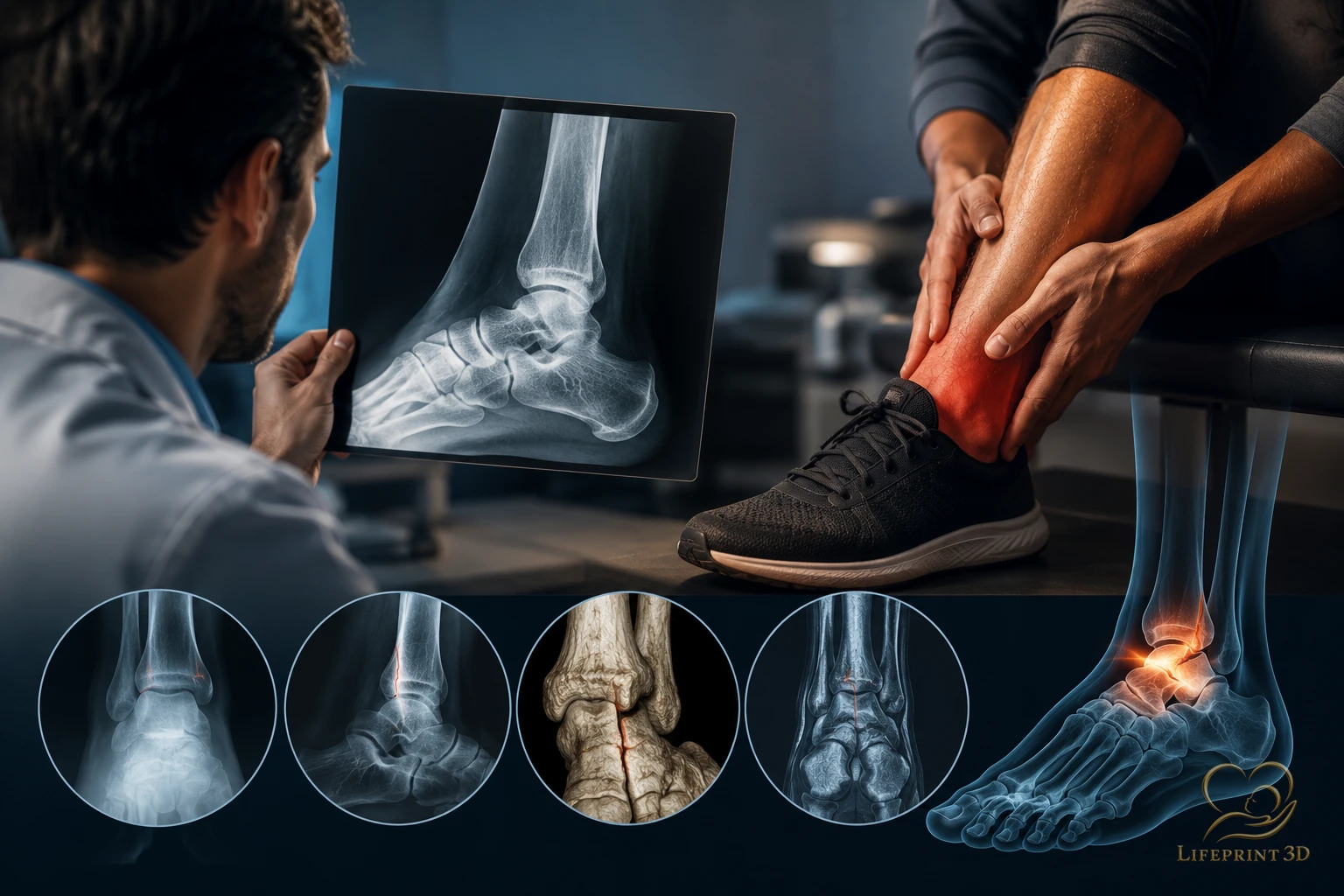
Patients are sometimes surprised when pain continues after a “normal” X-ray. Some fractures are subtle or occult on initial radiographs. This article explains that limitation in educational terms and how clinicians may consider additional imaging. It is not a diagnosis of your injury and not treatment advice.
What “Occult Fracture” Means
In imaging education, an occult fracture is one that is present clinically but not clearly demonstrated on the radiographs obtained. A peer-reviewed pictorial review on radiographically occult and subtle fractures discusses how overlapping bone, nondisplaced cracks, and early injuries can be hard to see, and how MRI or CT may reveal findings radiographs miss.
Occult does not mean imaginary pain. It means the first test did not show the finding clearly.
Why Plain Films Can Miss Injuries
RadiologyInfo’s bone X-ray page states that while X-ray images are among the clearest views of bone, they provide little information about muscles, tendons, or joints, and that MRI can detect subtle or occult fractures or bone bruises not visible on X-ray images. CT can image complicated fractures, subtle fractures, or dislocations; in older patients with osteoporosis, a hip fracture may be barely seen — if at all — on a hip X-ray yet clearer on CT.
Technique also matters: limited views, patient positioning, overlying splints, or very early imaging before resorption lines appear can reduce sensitivity for some injuries.
Hip Injury After a Fall: A Common Teaching Example
RadiologyInfo’s appropriateness summary for acute hip pain with suspected fracture explains that radiographs are usually first, but when a fracture is not seen and clinical suspicion remains, MRI without IV contrast is described as the preferred next test; CT is also generally appropriate, especially if MRI is unavailable or not feasible.
A 2024 systematic review and meta-analysis comparing CT and MRI for occult hip fracture reported that both modalities can be effective, while MRI demonstrated higher pooled diagnostic accuracy measures in the included studies. That supports why many pathways discuss MRI when excluding occult hip fracture is critical — without turning the review into a self-order.
What Patients Can Reasonably Ask
If pain, inability to bear weight, or focal tenderness persist after a negative radiograph, ask your clinician whether clinical suspicion still warrants observation, repeat radiographs, MRI, or CT. The answer depends on the bone involved, your age and bone health, exam findings, and urgency — not on this article.
If you later need a copy of whatever study was performed, see how to get a copy of your own scan images.
References
RadiologyInfo.org — Bone X-ray, limitations section (https://www.radiologyinfo.org/en/info/bonerad).
RadiologyInfo.org — Acute Hip Pain–Suspected Fracture (https://www.radiologyinfo.org/en/info/acs-acute-hip-pain-suspected-fracture).
Jarraya M, et al. — Radiographically occult and subtle fractures: a pictorial review. Radiol Res Pract. 2013 (PMID 23577253; doi: 10.1155/2013/370169).
Comparison of CT and MRI in diagnosing occult hip fracture: a systematic review and meta-analysis (PMID 39114706; doi: 10.62347/NUBB1946).
Key Takeaways
- In imaging education, an occult fracture is one that is present clinically but not clearly demonstrated on the radiographs obtained.
- RadiologyInfo’s bone X-ray page states that while X-ray images are among the clearest views of bone, they provide little information about muscles, tendons, or joints, and that MRI can detect subtle or occult fractures or bone bruises not visible on X-ray images.
- RadiologyInfo’s appropriateness summary for acute hip pain with suspected fracture explains that radiographs are usually first, but when a fracture is not seen and clinical suspicion remains, MRI without IV contrast is described as the preferred next test; CT is also generally appropriate, especially if MRI is unavailable or not feasible.
- If pain, inability to bear weight, or focal tenderness persist after a negative radiograph, ask your clinician whether clinical suspicion still warrants observation, repeat radiographs, MRI, or CT.
Frequently Asked Questions
Does a normal X-ray rule out a fracture completely?
Not in every clinical situation. Occult fractures exist; clinicians weigh symptoms and may order MRI or CT when suspicion remains high.
Is MRI always better than CT for missed fractures?
For many occult hip fracture pathways, MRI is described as highly sensitive. CT is faster and often appropriate when MRI is not feasible. The choice is clinical.
Can a bone bruise be seen on X-ray?
Bone bruises (contusions) are typically an MRI concept and are not expected to appear like a classic fracture line on plain films.
Related articles
Glossary · Frequently asked questions · All Learning Center articles